
04-18/2026
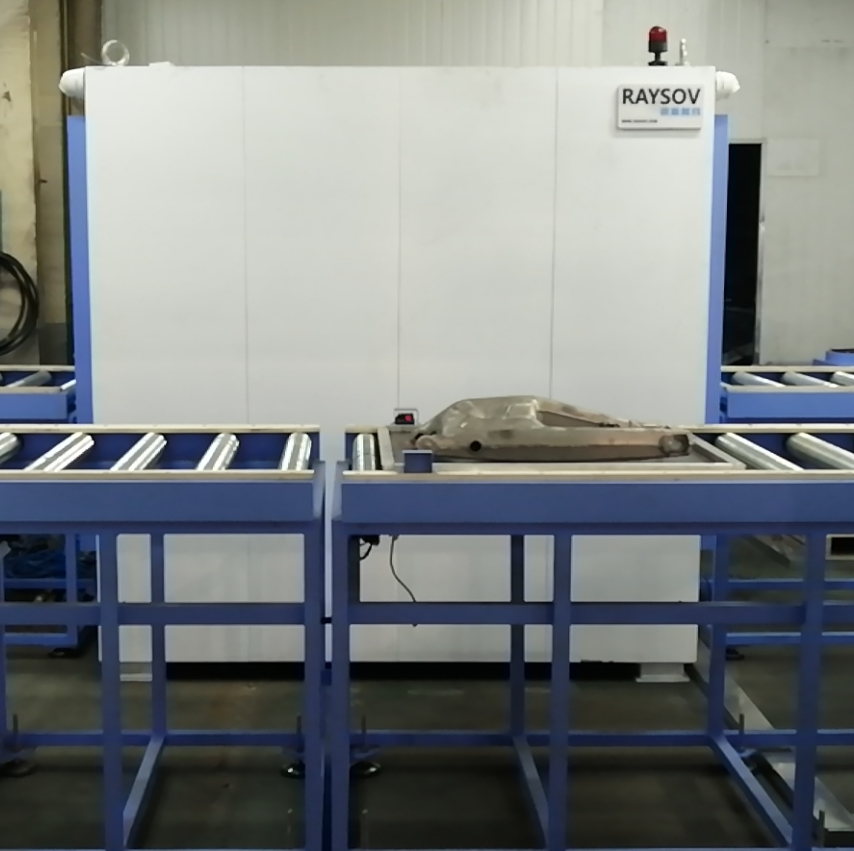
Industrial X-ray intelligent inspection system plays an irreplaceable key role in casting production. By employing non-destructive methods to accurately identify internal defects, it significantly enhances product quality, ensures production safety, and drives the intelligent upgrading of manufacturing processes.
◾Casting is a fundamental process in modern manufacturing, widely applied in automotive, aerospace, and mechanical engineering sectors. However, castings are prone to internal defects such as porosity, shrinkage cavities, and inclusions during forming. These potential issues cannot be detected through visual inspection, and traditional testing methods exhibit low efficiency and insufficient accuracy. Consequently, high-precision, automated non-destructive testing (NDT) technologies have become critical for ensuring casting quality.
◾The core value of industrial X-ray intelligent inspection system lies in comprehensive internal defect detection. Leveraging X-ray penetration capability, it provides clear imaging of castings' internal structures and effectively identifies various defects including porosity, cracks, porosity, and slag inclusions.
◾no detection blind spots for complex-shaped castings.
◾The enhanced quality control and production efficiency detection process requires no workpiece damage, is compatible with high-speed production lines, and enables 100% online inspection or batch sampling.
◾By integrating AI image recognition algorithms, the system can automatically identify defects and generate reports, reducing human error and achieving a detection efficiency improvement.
◾Supports process optimization and cost reduction by providing real-time feedback on defect locations and types, enabling enterprises to trace root causes and optimize process parameters such as smelting and casting.
◾Early elimination of nonconforming products prevents subsequent processing waste of manpower and resources, thereby reducing rework costs.